When AI revives the past: Technological advancement or emotional dilemma?
AI
In recent years technology has broken into the realm of human emotions and memory preservation. One of the most widely discussed topics is the use of AI to digitally simulate the presence of deceased loved ones. The integration of machine learning algorithms related to natural language processing mimicking human behaviour, creating an online avatar of our loved people and even us. While technology can be oriented to become a emotion-healer, new aspects related to AI can transform that reaching point into something ghastly.
While such technological advancements hold the promise of offering comfort by easing emotional distress, they also prompt significant concerns. The replication of human presence in digital form may blur the boundaries between life and death, raising complex ethical and psychological questions. As AI continues to evolve, it is imperative to carefully consider its implications on interpersonal relationships and personal growth, ensuring that the pursuit of technological progress does not inadvertently curb natural emotional development.
Technology is merely magic that we have learned to understand.
With the intervention of AI and technology in the management of deceased individuals the new term digital necromancy has been defined. This term could also refer to the use of Computer-Generated Imagery (CGI), which is not directly related to AI, but is becoming more connected every day. For years, this technique has been applied to deceased famous people such as Dalí or Morgan Freeman, but due to the easy access to these technologies, it has taken a step further, allowing people to start using the technology itself to communicate with deceased loved ones.
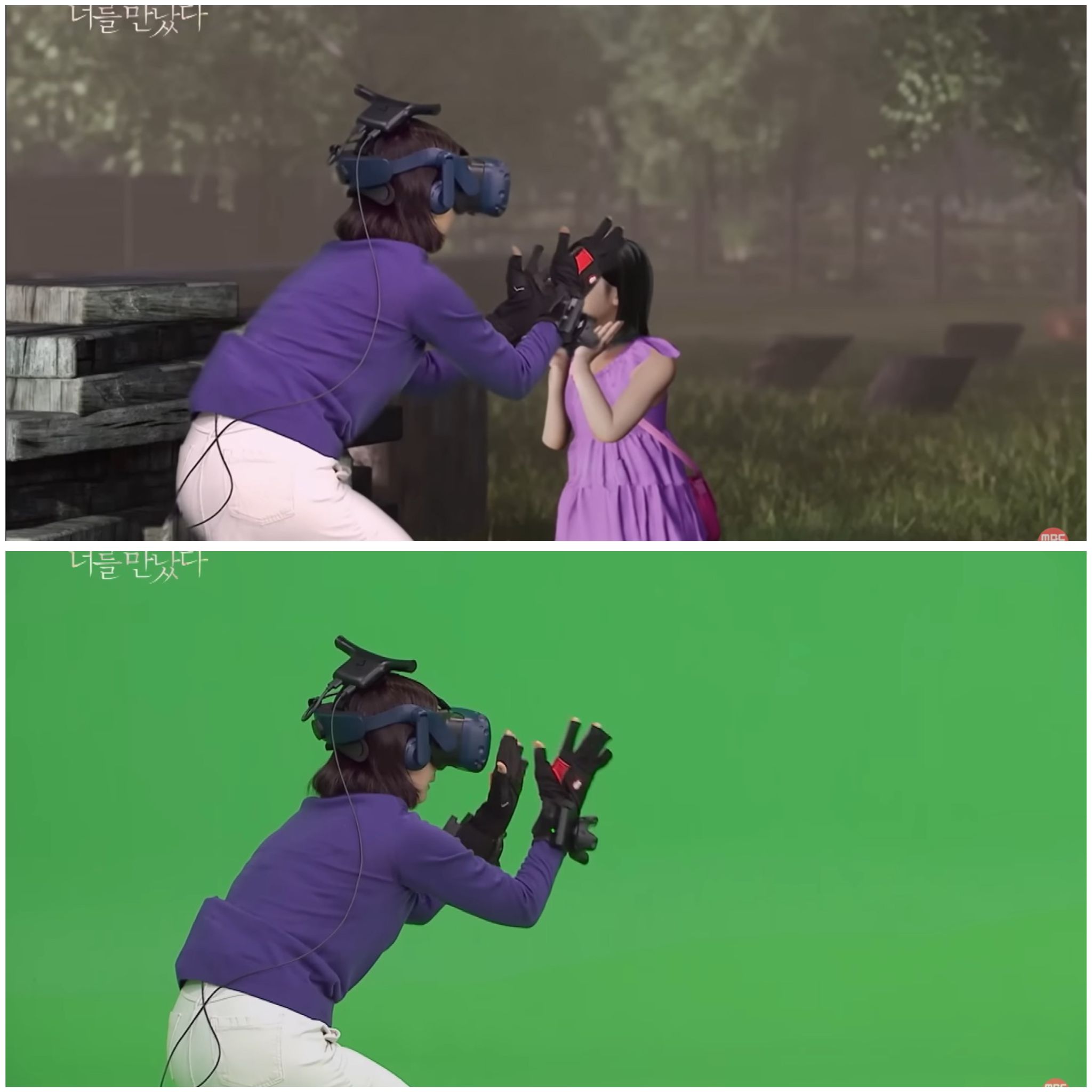
One of the biggest milestones was achieved in 2020, the South Korean network MBC aired the documentary "I Met You," in which a mother, was able to "reunite" with her daughter, who had passed away in 2016 at the age of 7 due to a rare illness. In the documentary we can observe several moments in which the mother is fully covered of green screen and then the frame changes into the VR world, where she reunites with her daughter.
Diving deeper into the topic of AI, new ways of reviving our deceased loved ones have been created. Due to the possibility of creating GPTs of OpenAI with our personal data, training new models with all the information of our beloveds, voice, way of thinking, beliefs... Involving this the way that we structure our own way of communication, expressions... Basically creating a perfect copy of the things that make us unique, transforming the popular phrase of 'each person is unique and different' into 'each person is different but replicable'
In the following blog, this topic is addressed, as a user of the blog replicated his friend using some tweets, books... The user compares this new life trend to an episode of the Netflix series 'Black Mirror'. In the series, the episode titled 'Be Right Back' shows the life of Martha, a girl who lost her partner, Ash. Eventually, the digital copy of him becomes the new Ash.
As AI continues to evolve, we move closer to a dystopian reality where the only difference between humanity and technology is the fact that we are the original version, the first of many copies that can be created. This will also affect how humans cope with the grief of losing a loved one, potentially leading to significant emotional challenges in the future. As AI advances in replicating our thoughts, behaviors, and even subtle emotional characteristics, we risk entering a reality where individuality and uniqueness lose their value. The concept of being 'one of a kind' could soon be replaced by 'one of many,' raising deep questions about identity, authenticity, and the true essence of being human.
As AI progresses and transforms our understanding of life and death, we must consider: are we prepared for a future where death no longer marks a final boundary but becomes the beginning of digital preservation? And what price will our humanity pay for this shift?